
INTERVIEW w/ Musroe

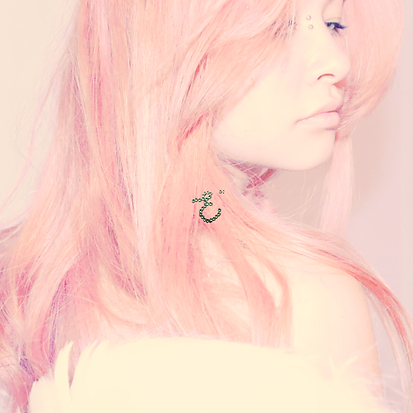
For Montréal-based artist and producer Musroe, music is less a fixed product than an evolving piece of multidisciplinary art. Writing, arranging, producing and directing her own work, she approaches each release through experimentation, allowing sound, imagery and ideas to develop alongside one another rather than conforming to a predetermined genre.
That philosophy sits at the heart of ‘Left2Rot/Now’, a two-track introduction to forthcoming EP 'EPHEMERA'. Designed to flow directly into one another, the songs capture opposing sides of the same emotional experience. ‘Left2Rot’ builds from uneasy suspension towards an increasingly claustrophobic breaking point, while the ambient dream-pop of ‘Now’ provides the release: a quiet return to the present after becoming consumed by something that once felt permanent.
We caught up with Musroe to discuss the contrasting emotions behind ‘Left2Rot/Now’, experimentation as a form of authenticity, bringing a curatorial perspective to music and the multidisciplinary world taking shape around EPHEMERA.
Can you tell us a bit about your background and how you got started in music?
I’ve always been an artsy kid, constantly making things, crafting, and exploring new mediums, but I was in my teens when I really delved into the world of music. I first fell in love with the sound of a few pop-punk and pop-rock artists, like Mayday Parade, 5 Seconds of Summer and Twenty One Pilots, and that inspired me to learn how to play the drums. I didn’t keep playing for long, but a few summers later, I picked up an old guitar my dad had lying around in the basement and very quickly started writing my own songs.
A little less than a hundred songs later, I figured I might as well learn to produce them and actually bring them to life. It was trial and error for a while, but I really liked the idea of being involved in every part of the creative process, so I started learning everything I could about music composition and theory. Eventually, when I started to get the hang of it, I found so much fun and solace in music production and arrangement. I haven’t looked back.
Who are your biggest musical influences and how have they shaped your sound?
Dominic Fike, for sure. We don’t make the same style of music, but as my favourite artist, he has inspired me so much in the way I approach and explore music. His philosophy surrounding music as a whole just really resonates with me.
I admire how involved he is in his own creative process; he writes most of his songs, produces many of them. I’m constantly amazed by the way he plays with his music, through his performance of his songs that differ each time and his merging of genres. For example, one of his takes that really shaped me is that he views vocals as simply another melodic element to arrange alongside the instruments, and that he’s comfortable with them being subdued at times or experimented with, which I find so rare to hear. That openness to experimentation has really liberated me creatively and encouraged me to be more authentic and trusting of my own artistic instincts.
Was there a specific moment or experience that made you decide to pursue music seriously?
Ever since I started writing my own songs, I’ve felt strongly that the process means something profound to me. It allows me to understand my own stories, make sense of my experiences, and express things that I sometimes can’t put into words otherwise. More than that, simply playing the guitar can calm me, bring tears to my eyes, or make me smile. I knew it was vital to my well-being long before I could really pinpoint why.
These days, I rarely go more than two days without touching an instrument or thinking about a song, and I wouldn’t want it any other way. The desire to create as much as I can has become my north star, constantly guiding my decisions and, ultimately, the way I live my life.
All that to say, in a way, I’ve always dreamed of pursuing music seriously. There isn’t a single moment that forged that decision. I think many small moments throughout the years have simply convinced me that this desire is worthwhile and needs to be explored. I couldn’t imagine another path bringing me the same sense of joy and fulfilment.
Can you walk us through your typical songwriting process?
I’d say the whole process usually happens quite quickly and is very intuitive for me. I’ll usually sit down with a guitar and start playing random chords and melodies until I find a little piece of sound that catches my attention. I don’t focus much on music theory when I’m writing; I simply try to tune into what the melody is trying to say—whether it feels melancholic, ominous, energetic, or something else entirely. At some point, it all kind of clicks, and the flow of the song starts to feel almost unchangeable. Ultimately, I like to let the song guide its own creation process. Whether it ends up being short or long, complex or simple, I feel like the song needs to become what it truly is.
Over the years, I’ve developed a deep appreciation for words and how stringing a sentence together can make you truly understand someone’s thoughts and feel their story. I read a lot of literary fiction for that particular reason; the prose can transport me to another universe. With the lyrics of my songs, I aim to offer listeners that same feeling. I like to write them as poems, filled with symbolism, descriptions, and vague ideas. I always of course end up adapting them to the melody of the song. But if you take the time to really read them, the story starts to reveal itself, which I think is a fun layer to any song.
My songwriting process is therefore a bit of intuition, a bit of exploration, a bit of self-expression, but mostly a whole lot of fun, letting sound fill up a room.
How do you find inspiration for your music and lyrics?
Inspiration truly is everywhere! Mostly, I think my own life is what makes me think and feel. Because my music has an inherently introspective quality, my own thoughts and feelings are a very deep well from which to draw inspiration. A simple story can be explored and extrapolated in such a way that it becomes a full song.
That’s why I value balance so much; having as much fun with friends as I do time to ponder by myself, seeking out experiences that make me grow, and making time to sit at my desk and strum away. “All work and no play makes Jack a dull boy,” as they say, and who wants dull music? I believe it’s so important, as an artist, to live a full life and then return to our creative space with something to say.
Beyond that, I find a lot of inspiration in visual art and literature. Looking at abstract or contemporary pieces in a museum is almost always sure to make me think of something new and expand my horizons, allowing a new idea to emerge. Reading poetry serves a similar purpose; sometimes, it only takes one beautiful word to make me want to write something of my own, which I’ll then want to put into music.
What themes or messages do you hope listeners take away from your music?
The message I want to put forth with my music is simple: art and creativity can offer solace. More than anything, I hope it inspires people to create, or simply to allow them to express themselves artistically in their own daily lives. I hope people enjoy the creativity in my music and notice all the little elements that make up a song. If I can inspire even one person to create, I’ll be happy to have contributed to putting more art and beauty into the world. I’ll feel like I’ve made a mark in the same way some of my favourite pieces of art have made a mark on me.
As for the themes, I always hope to convey a lot of emotion through my songs. I talk a lot about my own feelings, ponder my depression, my place in the world, and moments of doubt and sadness. I hope these thoughts reach someone who is going through similar emotions, and that my music can soothe them in some way. My calmer songs are meant to offer a moment of stillness, a space to catch your breath, while I hope my more emotionally expressive songs can serve as an outlet for people’s own stories, that they can make them their own.
What challenges have you faced as an emerging artist in the music industry?
I feel like we’re in a new age of the music industry, one where anyone can produce a track and put it out into the world. I think the democratization of music is amazing, but it also means that getting your work heard in a sea of so many artists can be much harder, especially as a new musician. It can sometimes feel like working away at an enormous project, only to step back and realize you’ve barely scratched the surface. At the same time, I can’t really be mad about it. I love the innovation and creativity that have come from this new creative landscape, and I find that working on a music project is a fulfilling journey in itself.
What has been the most rewarding aspect of your musical journey so far?
I’ve been told quite a lot that my sound is “distinctive.” That can feel incredibly promising, as distinctiveness is such a valuable artistic quality, while also being a little discouraging: where does “distinctive” music find its rightful home? I’ve decided to lean into that authenticity, even when those comments create doubt. So, whenever people send me kind messages or show me support, whether online or in person, it really warms my heart. There’s something incredibly rewarding about seeing people connect with something that came from such a personal place.
Last year, my second EP, titled TAKE ME AS I AM, I’ll Love You As You Are, was presented in full as part of an emerging art exhibition. The four tracks were presented individually but alongside one another, each with its lyrics, a photograph representing the song, and a pair of headphones. The installation invited listeners to really delve into the world of each song, and many people took the time to listen to all four. It was incredibly fulfilling to watch people experience my music for the first time and hear their reactions in person. That kind of direct listener-artist relationship means a lot to me.
How do you stay true to yourself and your artistry in a constantly evolving industry?
When I create, I try not to compare myself to others. Sometimes, when I’m in a period where I’m producing and writing a lot, I’ll even stop listening to other music for a while. Temporarily stepping away from other music allows me to hear my own instincts more clearly. I want to give the most authentic version of my own artistic voice the space to shine. Above all, as artists, we have to keep believing in our own vision and remember that we are ultimately the only judge that truly matters, not the industry, metrics, or anything else.
What can fans expect from you in the near future? Any upcoming projects or tours?
I have an EP coming out at the beginning of next year that will expand on the sonic world I created with Left2Rot and Now. It’s titled EPHEMERA. Beyond that, I’m hoping to keep creating fun things and collaborating with other creatives to bring new projects to life. Stay tuned, I think things are about to get exciting!
Where do you see yourself and your music career in the next five years?
I hope to still be creating and to have built a life around my music. I hope that by then I’ll have gained so much more knowledge and skill. There will always be more to learn, but I want to have grown tremendously as a performer, composer, and producer.
The goal is to be able to make a living from my art, but also to give back to the creative community. I have a big dream of eventually building an established enough career that I could create a non-profit recording studio where I could support and encourage emerging and innovative musical artists. I’d love to share knowledge and create spaces where the next generation of artists can experiment, learn, and bring their ideas to life.
For now, though, I’ll focus on creating more and more, putting it out into the world, and hoping it resonates with as many people as possible.
Listen to Musroe's double single 'Left2Rot/Now' below.


Comments