
On “Phoenix,” Firerose Writes Toward a Future She Couldn’t Yet See

There is an important difference between writing about survival afterward and writing about it while the outcome remains uncertain. Firerose’s new single “Phoenix” belongs to the latter category. Written during what she describes as an extremely difficult season, the song was created before she had reached the freedom it imagines.
That timing reframes the familiar phoenix metaphor. Firerose was not documenting a completed transformation when she wrote “I will rise / Out of these flames.” She was trying to anticipate one. She describes the song as a “premonition” of what emerging from that period might eventually feel like, with the hope that its message could extend to other people recovering from abuse and trauma.
The distance between then and now has given the song another dimension upon release. Firerose has since begun discussing her experiences with narcissistic abuse and coercive control publicly, while hearing regularly from survivors who recognize parts of their own lives in what she describes. She says those exchanges have encouraged her to continue sharing her story and turning what she endured into work that can reach other people.
“Phoenix” approaches that purpose through language of endurance rather than detailed autobiography. “All deception crumbles / Under the weight of truth in time,” Firerose sings in a line she identifies as especially personal. She describes the words as visceral to perform because of the belief behind them: lies can arrive loudly and with significant force, but she believes truth ultimately lasts.
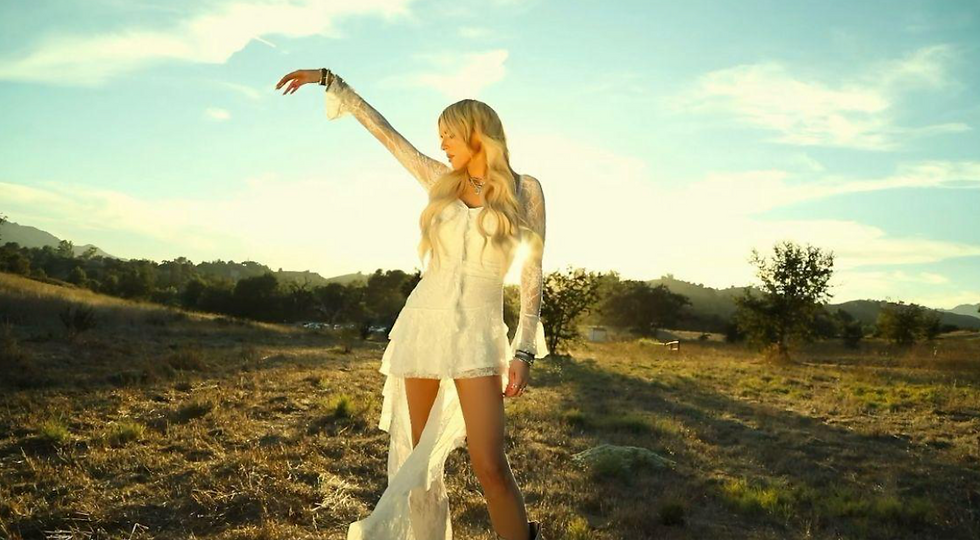
Photo credit: Chris Applebaum
That same idea has been translated visually by director Chris Applebaum in the song’s official music video. Its darkest images find Firerose hemmed in by black-gloved hands that touch her face, pull at her hair and enter her personal space. The opposing sequences move outdoors, replacing intrusion and confinement with sunlight and physical freedom.
Applebaum’s involvement began after he discovered Firerose’s work and reached out directly through Instagram. His interest was informed by both her music and her public advocacy. Once Firerose sent him “Phoenix,” he says he began seeing specific images for the video almost immediately, an unusual experience even after a career spanning three decades of prominent pop visuals.
That career includes directing Rihanna’s “Umbrella,” which won Video of the Year at the 2007 MTV Video Music Awards, along with Miley Cyrus’ “Party in the U.S.A.,” Demi Lovato’s “Heart Attack,” Selena Gomez & The Scene’s “Who Says,” Britney Spears’ “Overprotected,” Paris Hilton’s “Stars Are Blind” and numerous others. For Firerose, collaborating with a filmmaker whose videos she watched while growing up added another personal layer to a release already built around change.
The singer’s expanding creative work has followed a similar direction. Her podcast, No One Asked Her, explores faith, culture, healing, freedom and reclaiming one’s voice, with recent guests including filmmaker and The Narcissist’s Playbook director Mark Vicente and author Crystal Harris. Those conversations increasingly overlap with the subjects entering her songwriting.
“Phoenix” is also the first glimpse of where that songwriting is headed next. Firerose has confirmed that it will appear on a forthcoming album expected in early 2027, with further releases planned beforehand. As the first song from that project, “Phoenix” establishes a perspective rooted in what happened while keeping its attention fixed on what comes afterward.



Comments